
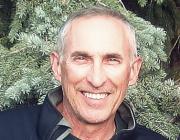

Biography, Daniel L. Johnson
Classes
Teaching. Dan Johnson (Professor, 2003-present). Each term also includes options for courses in ENVS and GEOG Independent Studies.
If you have interests and some background, and want to register but have a problem with prerequisites, email dan.johnson@uleth.ca for authorization and a waiver.
2020, Fall:
GEOG2090: Biogeography (introduction). On-line class, with additional recorded videos, labs, projects, and readings. 10:30 am – 11:45 am, Monday and Wednesday, 09-Sep-2020 to 09-Dec-2020. Weekly labs will be on-line, 3:00 pm - 5:45 pm, Thursdays, attended by Dan Johnson and Theepa Jegatheeswaran. A general description is on Moodle.
2020, Fall:
GEOG4030, also called ENVS 4000: Advanced Biogeography. (Fourth year and previous biogeography; contact instructor if permission or waiver is needed). On-line class, with additional recorded videos, forum, projects, and readings. 1:30 pm - 2:45 pm, Monday and Wednesday, 09-Sep-2020 to 09-Dec-2020. No lab, but we will have some practical case study discussion and workshops. A general description is on Moodle.
2021, Spring:
GEOG3095, Advanced Geographical Data Analysis (follows GEOG2700 or equivalent). This course is the next step in analysis of research data, and includes methods and projects. This is not a GIS class (those are separate).
2021, Spring:
ENVS4000, Current Events in Environmental Science.
2021, Fall:
GEOG2090, Biogeography (introduction).
2021, Fall:
GEOG2700, Geographical Data and Analysis (introductory statistics).
2022, Spring:
GEOG3095, advanced geographical data analysis (follows GEOG2700 or equivalent).
2022, Spring:
ENVS4000, Current Events in Environmental Science.
2022, Fall:
GEOG2090, Biogeography (introduction).
2022, Fall:
GEOG2700, Geographical Data and Analysis (introductory statistics).
Recent Courses
Spring 2013:
ENVS500 | First Nations Transition Program, Environmental Science
ENVS4000 | Sustainable Development and the Environment
GEOG3075 | Environmental Resources Management
Fall 2012:
GEOG 2700 | Geographical Data and Analysis
GEOG 2090 | Biogeography, and Lab
Other Recent Courses:
STAT 3850 | Design and Analysis of Experiments
ENVS 4000 | Impacts of Climate Change, Outline: Student Independent
Current Research
Topics of Current Research:
- Monitoring and analysis of potato psyllid and Zebra chip disease in Canada. (Aug 2017 newsletter)
- Monitoring and analysis of potato psyllid and Zebra chip disease in Canada.
- Development of biological control of grasshoppers and other agricultural pests.
- Modeling insect development, growth, feeding and reproduction.
- Effects of weather and other environmental variables on aquatic and terrestrial living systems.
- Other: Environmental law and conflict resolution. Environmental data analysis. Biogeography.

can-psyll-net-dec2017.pdf 14.16 MB
Recent Publications
- Modelling historical and potential future climate impacts on Keremeos Creek, an Okanagan-Similkameen watershed, British Columbia, Canada: Part II. Forecasting change in farm-level greenhouse gas emissions
- Modelling historical and potential future climate impacts on Keremeos Creek, an Okanagan-Similkameen watershed, British Columbia, Canada: Part I. Forecasting change in spring and summer water supply and demand
- A comprehensive assessment of solar and wind energy potential at the University of Lethbridge campus, a medium-sized western Canadian university
- Evaluating solar energy technical and economic potential on rooftops in an urban setting: the city of Lethbridge, Canada
- Complete genome sequence of phytopathogenic Pectobacterium atrosepticum lytic bacteriophage peat2
- Whence and whither the Convolvulus Psyllid? An invasive plant leads to diet and range expansion by a native insect herbivore