
| |
| |
|
|
|
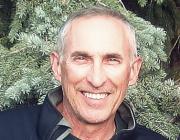
Dan L. Johnson
Professor of Environmental Science
BSc: USask (Biology, High Hon.);
MSc, PhD: UBC, Dept of Plant Science, &
Institute of Animal Resource Ecology.
dan.johnson
at uleth.ca
Member (- 2013) Alberta Environmental
Appeals Board.
Canada
Research Chair in Sustainable Grassland Ecosystems (- 2011)
C.V.  
Publications  
Biography
|
Department
of Geography (Biogeography)
University of Lethbridge, 4401
University Drive W.
Lethbridge, Alberta, Canada T1K 3M4.
Office WESB1020: (403) 329-2040, Students (403) 332-4047
Lab WESB1020 (403) 317-5056, Fax: (403) 332-4039.
  
|
Fall, 2012:
1) GEOG 2700, Geographical
Data and Analysis, 05-Sep-12 to 07-Dec-12, Tu Th 09:25-10:40
C756.
NOTE: Course designation: Science.
PREREQUISITE(S): One of Geography 1000 or Environmental Science
2000, or permission of D. Johnson
Lab is required (1 or 2):
Geog 2700 Lab 1 13:40-14:55 AH148 Montain J
Geog 2700 Lab 2 Tu 12:15-13:30 AH148 Montain J
2) GEOG 2090, Biogeography,
05-Sep-12 to 07-Dec-12, Tu Th 12:15-13:30 C756.
NOTE: Course designation: Science.
PREREQUISITE(S): Geography 1000 AND One of Biology 1010 or Biology
1020, or permission of D. Johnson
EQUIVALENT: Geography 3090 (prior to 2010/2011)
Geog 2090 Lab, M 09:00-11:50 E620 Johnson D
Outreach: some recent
articles in the Lethbridge Herald.
We created the "Public
Professor" weekly column in cooperation with the editors of
our city's paper to add to public understanding of academic work
and thought, with our University as one example. Many topics are
under consideration in a wide range of studies and disciplines at
universities, colleges, institutes, and labs. We wanted to present
some of that to the public. Because I am a natural scientist, I
particularly value public understanding of, and participation in,
science. When the Coalition on the Public Understanding of Science
(COPUS) formed to mark
the Year of Science, I was pleased that Lethbridge
was one of the "stars" on their map.
Example articles:
Healthy
skepticism (a good thing)
Comment from
Michael
Shermer:
http://twitter.com/#!/michaelshermer/status/201855651092238336
Use
of energy, environmental science tools for archeology (volunteer
research in Israel)
Early
springs may be more common (with discussion of public participation
in science)
Charles Darwin, the
scientist who changed everything
Awards
in education help students and promote new ideas (link here
to the Patrick
Chan Award
in Sustainable Agriculture)
|
The Department
of Geography includes researchers and instructors in earth science,
social geography, remote sensing, ecology, biogeography and agriculture,
united by interests in landscape themes and spatial analysis.
Research, teaching and
project topics:
Ecological agriculture
(class and program proposed)
Current and recent courses
taught:
Biogeography and biodiversity (GEOG2090)
Environmental Science,
First Nations Transition Program (ENVS500)
Experimental design and data analysis (STAT3850)
Biomonitoring, biodiversity, ecological tolerances, and ecological
change (ENVS4000)
Environmental safety
for wildlife, soil, water and food (ENVS4000)
Previous: Agroecosystems;
Geographic Information Systems I & II; Geographical Data Analysis
Research:
Environmentally compatible agriculture tools for North America, Africa,
Asia
Environmentally sustainable pest management;
Environmental safety for soil and water
Entomology and Insect ecology; development, diversity, pathology;
populations
Biopesticides as pest management alternatives in crop and grassland
management
Ecology and biometeorology modelling and experimentation
Plant and animal ecology, movement and dynamics
Sustainability under
changing climate and development
Threatened and endangered species; Invasive species
Alternative energy and waste management
Population modeling for environmental assessment and ecosystem health
Forecasting impacts of weather and climate on the distribution and
abundance of life
Geographic Information Systems (previous)
Teaching
Fall, 2012:
1) GEOG 2700, Geographical
Data and Analysis, 05-Sep-12 to 07-Dec-12, Tu Th 09:25-10:40 C756.
NOTE: Course designation: Science.
PREREQUISITE(S): One of Geography 1000 or Environmental Science 2000,
or permission of D. Johnson
Lab is required (1 or 2):
Geog 2700 Lab 1 13:40-14:55 AH148 Montain J
Geog 2700 Lab 2 Tu 12:15-13:30 AH148 Montain J
2) GEOG 2090, Biogeography,
05-Sep-12 to 07-Dec-12, Tu Th 12:15-13:30 C756.
NOTE: Course designation: Science.
PREREQUISITE(S): Geography 1000 AND One of Biology 1010 or Biology
1020, or permission of D. Johnson
EQUIVALENT: Geography 3090 (prior to 2010/2011)
Geog 2090 Lab, M 09:00-11:50 E620 Johnson D
Spring, 2012:
1) ENVS500. First Nations Transition Program, Environmental
Science.
Text: Withgott, Jay and Scott Brennan. 2009. Essential Environment:
The Science Behind the Stories, Third Edition. Pearson. Publisher:
Benjamin Cummings. Plus assigned readings related to environment,
science, related history, traditional knowledge, environmental
management and ecology.
2) ENVS4000. Sustainable Development and the Environment.
No central textbook, but there will be required assigned readings
from copies and textbooks placed on library reserve. Readings
will include articles and book chapter excerpts topics in environment,
environmental economics, ecological economics, environmental law,
environmental justice, sustainable agriculture, sustainable resource
utilization, sustainable cities, cases studies, regional topics,
globalization, environmental modeling, environmental management,
environmental impacts, forecasting, monitoring, and related topics.
Spring 2012
ENVS 4000: Environmental Science for majors "Sustainable
Development and the Environment"
ENVS 500: Environmental Science for First Nations Transition Program
Fall 2011:
1) GEOG2090 Biogeography.
Lectures Tuesday and Thursday, 12:15-13:30, D631.
2) Lab Monday morning, 9-11:30, E620
Spring 2010
GEOG 2700, Geographical Data Analysis, Outline:

Biogeography section of GEOG1010
Student Independent Studies
Fall 2009
GEOG 2700, Geographical Data Analysis
Student Independent Studies

STAT3850, Design and Analysis of Experiments (undergraduate),
Outline:
This is a new class. I chose this name to emphasize that it concerns
not only analysis of data, but also the restrictions on randomization,
and hypothesis contruction.
STAT5850, Design and Analysis of Experiments (graduate students),
Outline:
STAT 3850 Lab and Tutorial
ENVS4000, Sustainable Development and the Environment, Outline:

Student Independent Studies
Spring, 2008
STAT3850, Design and Analysis of Experiments (undergraduate),
Outline:
STAT5850, Design and Analysis of Experiments (graduate students),
Outline:
STAT 3850 Lab and Tutorial
ENVS4000, Environmental Impacts, Outline:

Student Independent Studies
Fall, 2008
I will not be teaching Biogeography this fall (taking a break
after a decade of teaching this class)
Student Independent Studies
Spring, 2007
ENVS4000, Impacts of Climate Change, Outline:

Student Independent Studies
Fall, 2007
GEOG 3850, Biogeography (and Methods in Biogeography Lab/Tutorial),
Outline: 
Student Independent Studies
Spring 2006
ENVS4000, Ecosystem Monitoring, Outline:
Fall,
2006
ENVS500, Environmental Science for the First Nations Transition
Program
GEOG3850, Biogeography (and Methods in Biogeography Lab/Tutorial)
Spring 2005
ENVS4000, Agroecosystems, Outline:

Fall, 2005
ENVS500, Environmental Science for the Native Transition Program
GEOG3850, Biogeography (and Methods in Biogeography Lab/Tutorial)
|
Location:
Alberta Water and Environmental Science Building (completed
Nov, 2008)

The
University of Lethbridge is in the Oldman River
valley.

Post-doctoral Research
Associate, 2010-2011: Dr. Xuedong Chen, (403)
332-4048
Current graduate student
research:
Cara Adrain, Region-based
Biomonitoring for Improved Environmental Management of Industrial
Sites. In progress.
Rob Sonnenberg, The development of an aquatic community in a reclaimed
alpine mine pit lake.
Funded by Alberta Conservation
Association. Successfully defended.
Paul Irvine, Development
of improved mathematical models of weather-related spring events,
including insect emergence and development. Funded by AAFC Pesticide
Risk Reduction Program, Pest Management Centre, Ottawa, and Pulse
Canada. Successfully defended.
Chien Yang, Factors affecting
rate and quantity of natural gas generated from urban waste, in
collaboration with the City of Lethbridge Wastewater Treatment Plant.
In progress.
Wonnita Andrus,
Ecology and Conservation of Prairie Rattlesnakes (Crotalus viridis
viridis) in Relation to Movement in a Fragmented Urban Environment.
Successfully defended.
Other previous MSc
students:
Susan
Entz ; Meg
McCluskie ; Luke
Powell (University of Guelph)
New Graduate Student
Positions Open in 2010:
1. Insect pathology and
biological control, for reductions in pesticide use
(related to a range of possible issues regarding development of
biopesticides)
2. Grassland ecology and sustainability
(may include weather and climate; sustainable agriculture; water
and soil quality and conservation)
3. Biomonitoring (filled)
Technical support:
2009: Patrick
Chan (pesticide risk reduction research)
2010-2012: Dr. Xuedong
Chen
Current research topics
in this lab:
- alternatives to pesticides, to protect soil and water, and provide
alternatives for agriculture
- ecologically sustainable agriculture
- development of healthy ecosystems in coalmine pit lakes, and other
water bodies
- aquatic insects and factors that affect them
- wastewater and environmentally sustainable applications
- sustainable grasslands (dry mixed grass, fescue, & montane
environments)
- climate and future conditions in Alberta ecosystems
- threatened and invasive species
- statistical methods and ecological modeling
Biopesticide R&D
program:
Summary;
further details available on request.
Recent
poster summary.
Johnson.,
D., Goodwin, M., Irvine, P., Kaminski, D., Byrne, J., Johnson,
E., Hartley, S, and Olson, B. 2010. Sustainable management tools
for growers: a made-in-Canada biopesticide option, combined with
an early warning of risk, and accurate pest identification. Poster
Presentation, Pulse Days 2010 (Jan 11-12, 2010, Saskatoon, SK).
Funding:
Alberta Conservation Association
AAFC Pesticide Risk Reduction Program, Pest Management Centre
Alberta Crop Industry Development Fund
Canada Foundation for Innovation
Canada Research Chairs
Department of National Defence, Canada (environmentally sustainable
grassland insect control)
NSERC
Pulse Canada
Saskatchewan Pulse Growers


Winners of the Darwin
Day Poster Competition:
He Li and Adam Sarjeant

On Feb 15 evening (Wednesday),
we will have a fairly informal birthday gathering to cheer Charles
Darwin, and the continuing positive effects of his ideas for science,
and for the good of humanity. We will display the winning posters,
have birthday cake and other snackes, chat about Darwin-related
things, and watch "Charles Darwin and the Tree of Life",
by David Attenborough (BBC), and "The Genius of Charles Darwin",
by Richard Dawkins. We do not have a speaker - we are meeting
for birthday cake, to show the winning posters, and to see a video,
if people are interested.
Free. All are welcome
(but the space is a bit limited; we can hold 80 or so in a pinch).
Location: Galileo's
Lounge, 2nd floor, on the north side, Student Union Building,
University of Lethbridge
(this is not a bar-type
lounge; it is just a sitting area, and all ages can attend)
(map
pdf) , (another map)
|
Evening Travel Lecture
at the Lethbridge Public Library:

"China
Today", April 27, 2011, Poster 
Link
to poster image above 
Library
notice
Biogeography
is the study of the distribution of living things on earth, with special
attention to how those species and ecological communities came to
be where they are, how they interact with each other and the landscape,
and what their future might be. Science Alberta made this new
career video related to an example of Biogeography
and Biodiversity.

(Brent Bawel,
Producer)
www.sciencealberta.org
http://www.wonderville.ca/videos/biodiversity.html
News for 2009...
NASA: 2009 Second Warmest Year on Record; End of Warmest Decade.
2009 was the warmest year on record in the Southern Hemisphere.
http://www.nasa.gov/topics/earth/features/temp-analysis-2009.html
News for 2010... 2010 Tied with 2005 for Warmest Year on Record
say NOAA and NASA
http://www.universetoday.com/82514/2010-tied-for-warmest-year-on-record-say-noaa-and-nasa/
|
MISC: Recent posts for
student discussion
Canada in a Changing Climate:
Sauchyn, D., Kulshreshtha,
S., Barrow, E., Blair, D., Byrne, J., Davidson, D., Diaz, P., Henderson,
N., Johnson, D., Johnston, M., Kienzle, S., Klaver, J., Thorpe,
J., and Wheaton, E. 2008. The Prairies; in From Impacts to Adaptation:
Canada in a Changing Climate 2007, edited by D.S. Lemmen, F.J.
Warren, J., Lacroix and E. Bush; Government of Canada, Ottawa, ON.
"Sun
and climate have been going in opposite directions during the
last 35 years of global warming."
Arguments against current
climate change theory, vs. what
the science says (John Cook)
Climate Data Sources:
if
the facts matter in your view of the situation
CO2 and climate: why
is there a link? 
Scientific
American, November 30, 2009:
Seven
Answers to Climate Contrarian Nonsense
Some interesting reading:
How much error did the "urban heat island effect" account
for, in surface data records? How much of the climate warming conclusions
were affected? It was one of the main arguments of the deniers.
Find
out here. (from
John Cook at http://www.skepticalscience.com/)
More on the urban
heat island effect.
New Scientist special
series: Living
in Denial.
When
a sceptic isn't a sceptic
Why sensible
people reject the truth
How corporations
manufacture doubt
Who
is a scientist, anyway?
The
Known Universe (AMNH)
Are you
interested in insects?
Mayfly
hatch
Stick
insect hatch
The
Mating Game

I've proposed
a new field course to this site:


Information
on hiking to see the famous invertebrate fossils at the Burgess Shale.


|
Example background
for related class discussions
|
Example
Photos from IRF Project #168, Assessment
of Grassland Management and Restoration Practices on the Availability
and Quality of Insects as Food for Grassland Species at Risk
Part
1: land, insects and methods
Part 2: examples of method
used in the project
Part 3: general interest
photos of insect prey being consumed
Species at risk summary: Burrowing
Owl;
Recovery
Team, and more about Burrowing Owls
|
|
|
|
USDA:
ecotoxicology and environmental side effects of insecticides
|
|
|
Book
available: Microbial control of grasshoppers
and locusts.
Published by the Entomological Society of Canada.
Available on request.
|

|
At right, I'm
holding an African grasshopper, Kraussaria angulifera (5th-instar
female), killed by naturally occurring Sorosporella, a fungus.
This disease agent
was common in northern Mali in 1989. I was there to conduct field
tests with a protozoan biocontrol agent, Nosema locustae, but
this fungus occurred naturally.
|
Recent
endangered species survey:
Do
you have Yucca plants in Canada that produced fruit this year
or in previous years? Or, do you have Yucca that produced flowers
and no fruit? Help
our survey by sending the information to dan.johnson@uleth.ca.
The Yucca plant
(also called soapweed) is pollinated only by the Yucca moth.
Alberta has a Recovery Plan for the Yucca moth. We would like
to know whether they are distributed widely, and the best way
is to map where Yucca produces fruit or not.
Some
related good news: a pod showing evidence of pollination by
the yucca moth was recently found at the Pinhorn
Grazing Reserve: 

|
Entomology
resource material for interested members of the public
Broader
research is underway to find ways to make agriculture and grassland
management more environmentally sustainable. One way is to avoid
the use of pesticides unless that are warranted.
Download
a free copy of a
photographic guide to grasshoppers,
,
prepared
at the request of Pulse Canada, Saskatchewan Pulse Growers, and
Agriculture and Agri-food Canada.
Spring
Grasshopper Identification Guide
Are
you looking for the page on "
Recognizing grasshoppers" ?
or
the Kids' grasshopper page:
 ?

|
|